
AI is writing code for products it doesn’t understand
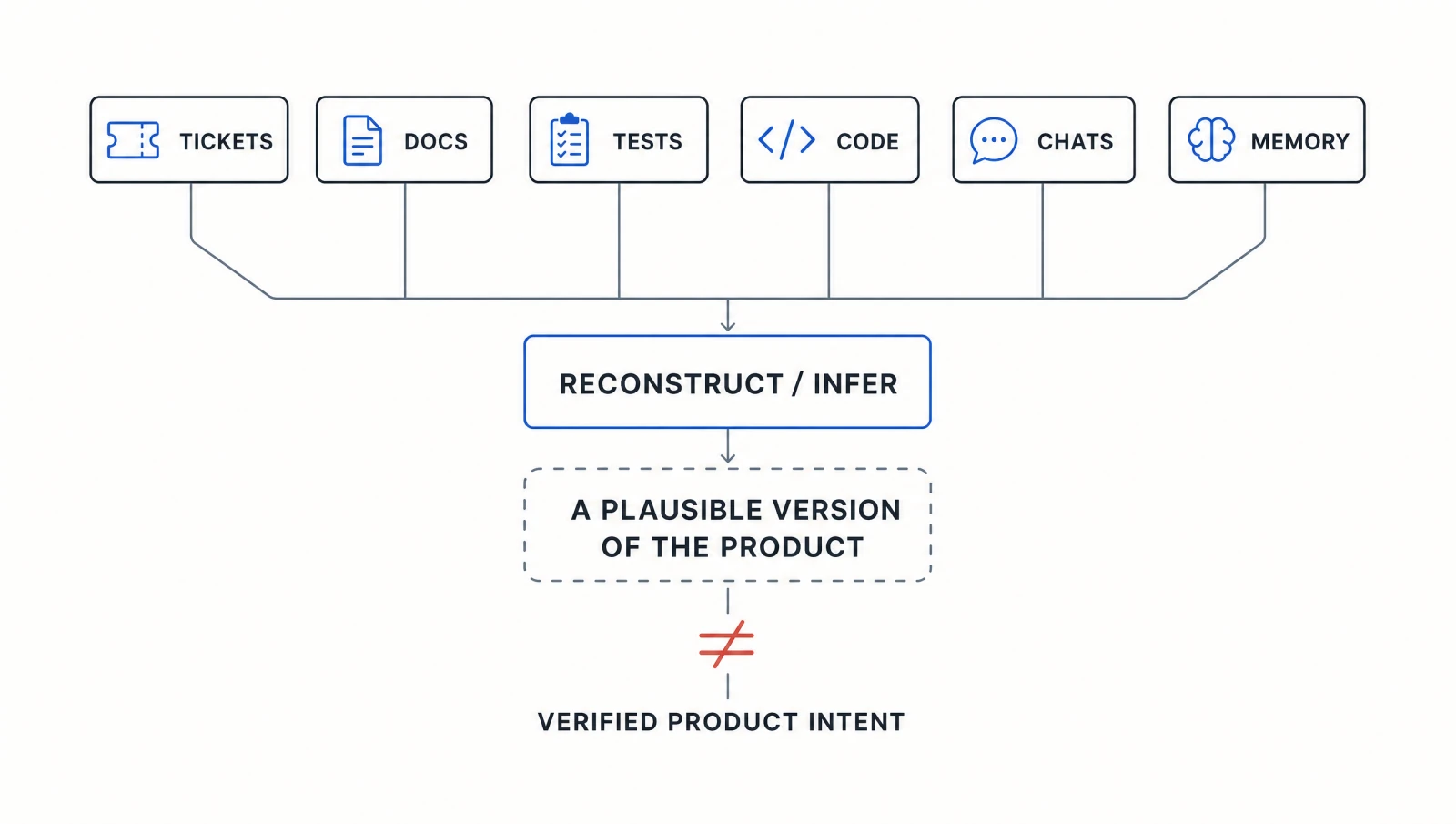
Coding agents can read code, tests, and tickets. Without a reliable product definition, they still have to reconstruct what the product is supposed to be.
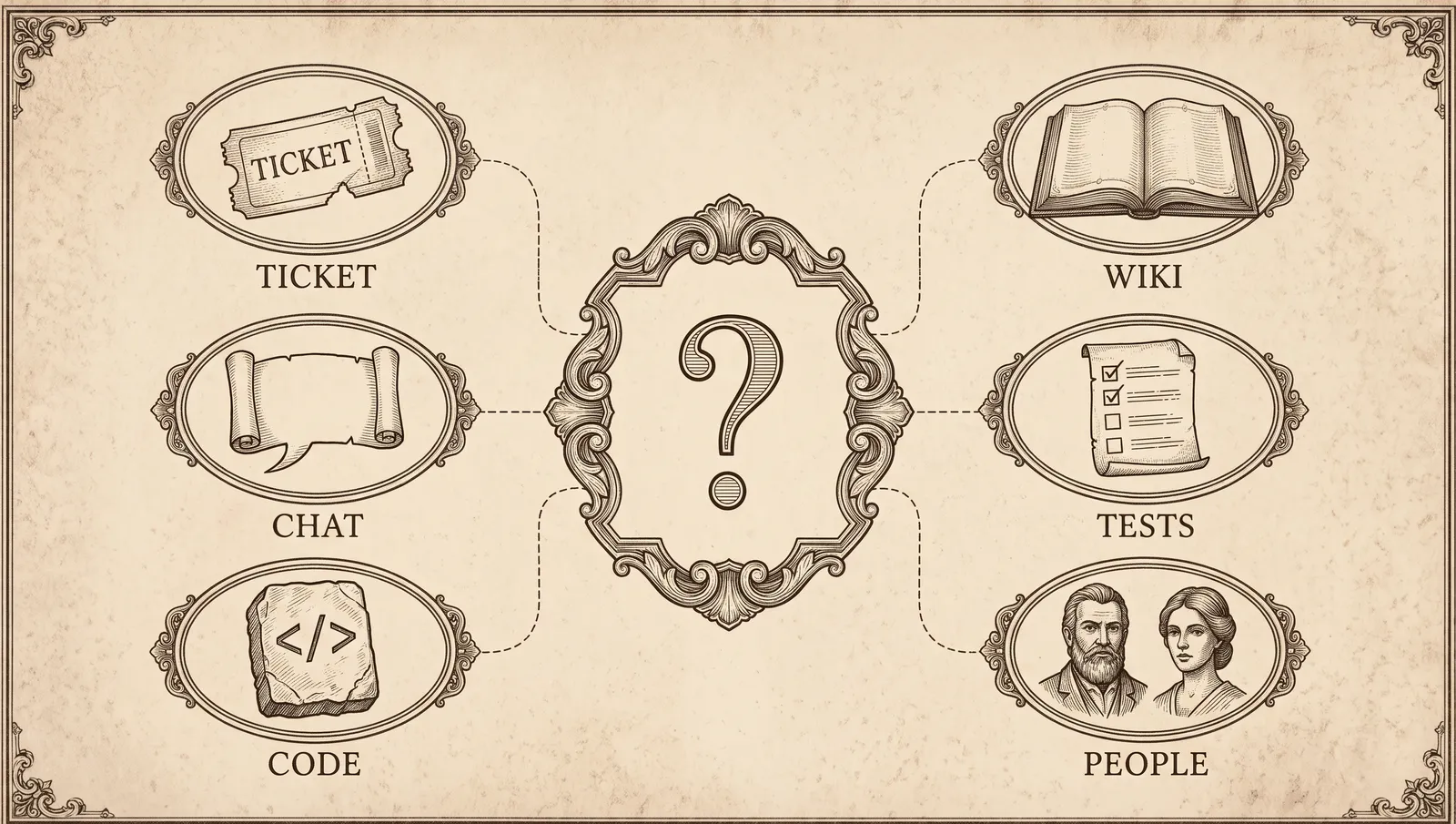

Coding agents can read code, tests, and tickets. Without a reliable product definition, they still have to reconstruct what the product is supposed to be.
We are giving AI control of the codebase without giving it a reliable definition of the product.
Ask a coding agent to change what happens when a free trial ends. Should the workspace become read-only? Is there a grace period? Can users export their data? Do scheduled actions keep running? What happens to invited teammates?
The agent can find the relevant code and tests. What it cannot find is which of those answers represent the product's current intent.
Evidence is not a product definition
The answers are usually scattered across the pricing page, an old launch ticket, billing and permission logic, tests, a support playbook, and somebody's memory. Every source is useful. None defines the current product as a whole.
Trial expiration crosses billing, permissions, collaboration, data retention, exports, and automations. Each system can behave consistently while producing a customer experience nobody deliberately defined.
The agent does not discover the product. It reconstructs one, filling every gap with a product decision nobody explicitly made—then writes code as if that reconstruction had been approved.
Code is the closest evidence of what shipped, but it cannot explain what the behavior means. A temporary workaround looks much like a deliberate business rule. Tests confirm what happens, not why it must happen.
Better documentation is not enough
Wikis, design documents, and decision logs are good at authoring. Their shared weakness is that they cannot tell us when they have become false. When behavior changes underneath a document, nothing fails; it quietly stops being true.
The problem is not that a product definition is hard to write. The problem is that a written product definition has no way of knowing it is now wrong.
Agents turn ambiguity into action
People reconstruct the product from the same fragments. Coding agents simply do it faster—and then act on the reconstruction.
More context helps it see more evidence. It does not create the missing decision that only lived in a conversation or distinguish an intentional constraint from a historical accident.
The result can be reasonable code for a subtly incorrect product. Reviewers catch some of it. The rest ships.
What a durable product definition requires
Simply documenting the product more clearly is not enough. A durable product definition must be:
- Current and centralized: one shared definition of how the product should work, updated as the product changes.
- Versioned with the code: changing in the same history as implementation.
- Readable by people and agents: structured without becoming opaque.
- Organized around product definition: who it serves, where they reach it, what it keeps, what it can do, and which rules must stay true.
- Tied to evidence: making drift visible when implementation and intent diverge.
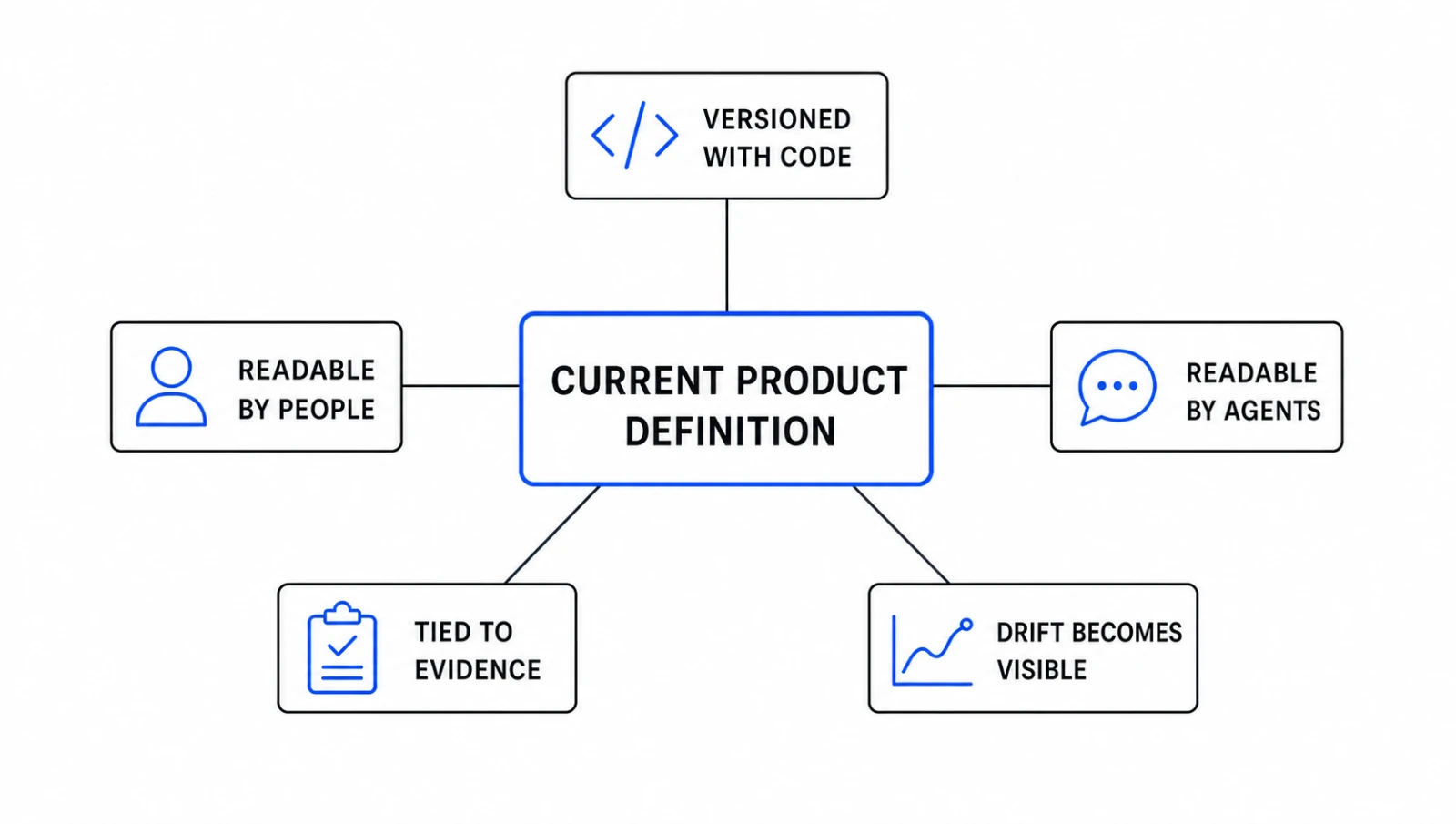
Call it a Product Model or a product definition. The name matters less than the property: it cannot quietly become fiction.
With that definition, people can understand the current product without archaeology, and agents can build from explicit decisions instead of inventing the missing ones.
Over the past few weeks, I have been working on an open standard for product definitions and an open-source implementation of it. I am planning to release them soon.
Where does your product definition live today? Have you run into this problem? How does your organization handle it?
Give your agent the product, not just the code.
Build a Product Model in your own repository, or pull a Blueprint and hand it straight to a coding agent.