What the product keeps, and who acts on it
- Order
- Customer
- Payment provider
Open source
Your AI agent is guessing what the product is. PDD gives agents and humans a shared product model that is git-tracked, reviewable, and verifiable.
npx pdd-toolkit install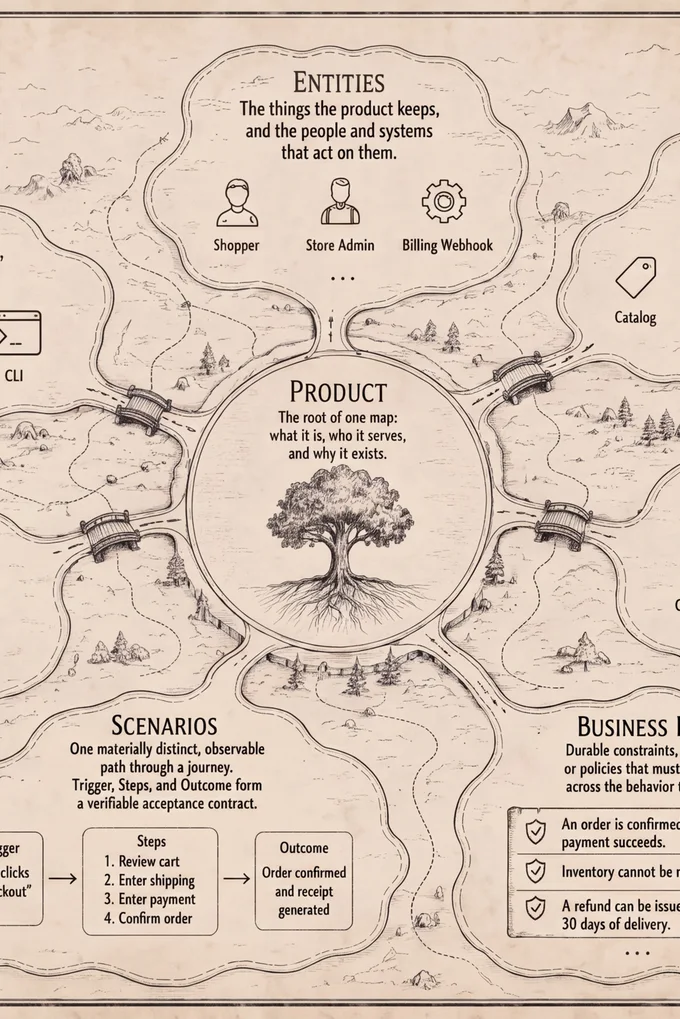
One definition of what your product does.
What the product keeps, and who acts on it
How people and systems reach the product
The subject areas the product is split into
What the product lets someone do
One goal, carried across several capabilities
What must always hold, and who may do what
Where the product works in more than one way
It already exists, just unstructured, incomplete and scattered across docs, code, tickets, chats and people.
Written before the work, never corrected after
It shipped differently, and nobody went back
Accurate on the day it was written
Where the decisions were really made, and lost
Flows and screens the build moved on from
Shows what it does, never what it must do
Say what is, not what must be
Leave when they leave
Bring knowledge from docs, designs, code, and people into one product model. Fill gaps, clarify uncertainty, and make every source leaner and more focused.
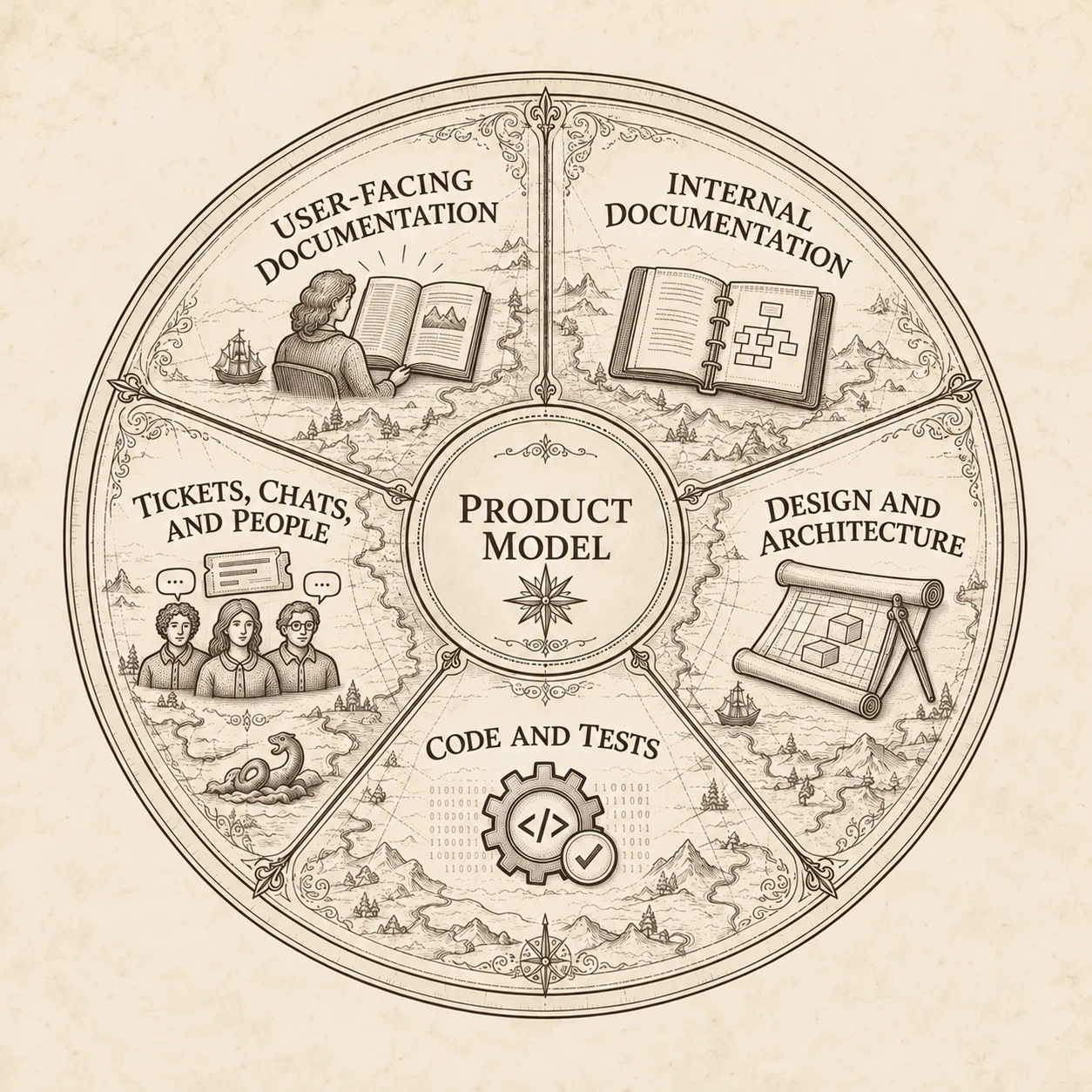
| Source | Focus |
|---|---|
| User docs | Teaches people to use the product |
| Internal docs | Records architecture, design decisions, and onboarding |
| Design & architecture | Describes how it should look and work |
| Code & tests | Implements and verifies how it is built |
| Tickets, chats & people | Carry context, requests, and undocumented knowledge |
One shared definition guides the work and stays current as the product changes.
Without a product model
Tickets, docs, chats, code and people each hold a piece.
With a product model
It lives beside the code and links back to those sources.
Without a product model
They infer behavior and rules from whatever they can find.
With a product model
They get journeys, scenarios and rules before they start.
Without a product model
It can work correctly and still miss product intent.
With a product model
Approved scenarios make the expected behavior clear.
Without a product model
Old docs can look correct long after behavior changes.
With a product model
The model provides a clear reference as behavior changes.
Without a product model
The reason is left in a ticket, document or conversation.
With a product model
Model and code updates are reviewed together in the PR.
Without a product model
Tickets and specs explain changes, not today's product.
With a product model
Approved behavior remains part of the product definition.
Ideate and verify with pdd-kit. Your own agent implements, your way.
/pdd-ideateDecide the next change and record it in the product model.
your agent, your way
In phases, with plan mode, an SDD tool, or freestyle.
/pdd-verifyCheck and improve the code and product model until they agree.
Back to Ideate. The next change starts here.
pdd-kit is open source and MIT licensed.
Get started